

What is DTF printing? If you’ve been exploring custom apparel decoration methods, you’ve likely encountered the term “what is DTF printing” more frequently over the past few years. Direct-to-Film (DTF) printing has rapidly emerged as one of the most versatile and accessible technologies for producing vibrant, durable custom designs on virtually any fabric type. But what is DTF printing exactly, and why has it captured the attention of everyone from hobbyists to commercial print operations?
This comprehensive guide will walk you through everything you need to know about what is DTF printing technology—from the basic principles to practical applications, helping you understand whether this innovative method is right for your custom apparel business or creative projects.
Understanding What is DTF Printing: The Basics
Definition and Core Concept of What is DTF Printing
When people ask “what is DTF printing,” they’re asking about one of the most innovative breakthroughs in textile decoration. DTF stands for Direct-to-Film printing, a relatively recent innovation in the textile decoration industry that has fundamentally changed how custom designs are applied to garments. Unlike traditional methods that print directly onto fabric or require complex screen setups, understanding what is DTF printing means knowing it works by printing your design onto a special PET (polyethylene terephthalate) film, applying a powder adhesive, curing it, and then heat-transferring the completed design to virtually any fabric type.
Think of DTF as a bridge between the vibrant, detailed printing capabilities of modern digital printers and the versatility of traditional heat transfer methods. It combines the best aspects of several decoration techniques while minimizing many of their limitations. According to Printwear Magazine, DTF has become one of the fastest-growing segments in the custom apparel industry.
Brief History and Evolution of DTF Technology
While the exact origins of what is DTF printing technology are somewhat debated within the industry, the method gained significant commercial traction around 2020-2021. Born from innovations in adhesive technology and digital printing, DTF emerged as manufacturers sought to create a more versatile alternative to Direct-to-Garment (DTG) printing, which had dominated the digital decoration space for years.
The technology evolved rapidly due to several converging factors: improvements in water-based pigment inks, the development of hot-melt adhesive powders suitable for textile applications, and the growing demand for on-demand custom apparel that could work across diverse fabric types. What started as an emerging technology primarily available in Asian markets quickly spread globally as equipment became more affordable and accessible. Industry publications like Impressions Magazine have documented this rapid growth extensively.
Why DTF Printing is Revolutionizing Custom Apparel
DTF printing has disrupted the custom apparel industry for several compelling reasons. First, it eliminates the fabric-type limitations that plagued DTG printing, which traditionally worked best on cotton but struggled with polyester and other synthetic materials. Second, it offers a lower barrier to entry than screen printing, which requires significant setup costs and is only economical for larger production runs.
Perhaps most importantly, what is DTF printing delivers professional-quality results with vibrant colors, excellent detail reproduction, and impressive durability—all while maintaining a soft hand feel on the finished garment. For small businesses and entrepreneurs, this combination of quality, versatility, and accessibility has opened doors that were previously closed by equipment costs or technical limitations. If you’re ready to explore specific equipment options, check out our comprehensive DTF Printer Buying Guide or browse DTF Printers by Brand.
How What is DTF Printing Works: Step-by-Step Process
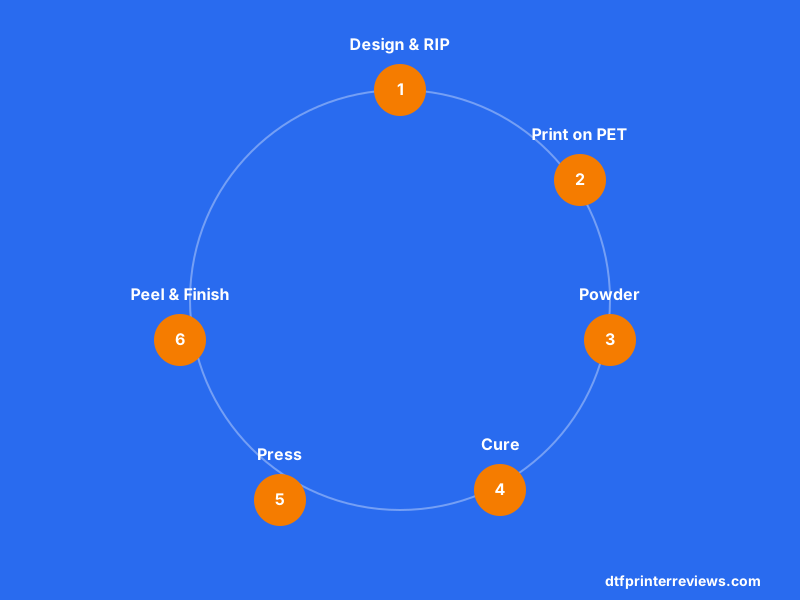
Understanding what is DTF printing means understanding its unique process. While it may seem complex at first, the workflow is quite logical once you break it down into its component steps.
Step 1: Design Preparation and RIP Software
The process begins with your design file, typically in formats like PNG, PDF, or vector files. You’ll use RIP (Raster Image Processor) software specifically designed for DTF printing to prepare your artwork. This software handles crucial tasks like color management, white ink layer generation, and print positioning.
The RIP software is particularly important because it automatically creates the white ink layer that serves as the foundation for your colored design. On dark fabrics, this white layer ensures your colors remain vibrant and true to the original design. The software also manages color profiles to ensure what you see on screen closely matches the final printed result.
Step 2: Printing on PET Film
Once your design is prepared, it’s printed onto the special DTF PET film using a modified inkjet printer equipped with DTF-specific inks. Most DTF printers print in CMYK (Cyan, Magenta, Yellow, Black) plus white ink—the white ink being the critical differentiator that allows DTF to work on dark and colored fabrics.
The printer applies the colored design first, followed by a layer of white ink underneath. This white layer serves two purposes: it provides opacity so the design shows clearly on dark fabrics, and it creates the base that will interact with the adhesive powder in the next step. The film emerges from the printer with your design visible but not yet ready for transfer.
Step 3: Powder Adhesive Application
Immediately after printing (while the ink is still wet), a hot-melt adhesive powder is applied evenly across the entire printed area. This can be done manually using a powder shaker or automatically with a powder shaking machine. The powder adheres to the wet ink and forms the crucial bonding agent that will later attach your design to the fabric.
Excess powder must be carefully removed—typically by gently shaking the film or using a collection tray—leaving only the powder that has stuck to the printed areas. Getting the right amount of powder is important: too little results in poor adhesion and durability, while too much creates a stiff, heavy feel on the finished garment.
Step 4: Curing/Melting the Adhesive
The powder-coated film then passes through a heating element—either a conveyor dryer, heat press, or dedicated curing oven. This heat melts and fuses the adhesive powder to the ink, creating a cohesive transfer-ready film. The curing process typically requires temperatures between 160-170°C (320-338°F) for 2-3 minutes, though specific parameters depend on the powder manufacturer’s recommendations.
After curing, the film cools and the adhesive solidifies into a tacky, rubbery layer. At this point, your transfer is complete and ready for application. Cured transfers can be stored for extended periods, making them ideal for pre-production or inventory management.
Step 5: Transfer to Garment with Heat Press
To apply the design to your garment, you place the cured film (design side down) onto the fabric and apply heat and pressure using a heat press. Standard transfer temperatures range from 160-170°C (320-338°F) with medium pressure for 10-15 seconds, though these parameters vary based on your specific ink, powder, and fabric combination.
The heat reactivates the adhesive, causing it to bond permanently to the fabric fibers. This is where what is DTF printing’s versatility shines—the same transfer process works on cotton, polyester, blends, nylon, leather, and even some treated woods and metals. The heat press ensures even temperature and pressure distribution across the entire design.
Step 6: Peeling and Finishing
After pressing, you can either hot-peel (immediately after pressing) or cold-peel (after the transfer has cooled) depending on your transfer film and powder specifications. Most modern DTF applications use cold-peel for best results, as it reduces the risk of stretching or distorting the design and generally provides better adhesion.
Once peeled, the carrier film separates from the garment, leaving your fully-transferred design bonded to the fabric. The result is a vibrant, durable print with excellent color reproduction and a soft, flexible feel. For optimal durability, many manufacturers recommend waiting 24 hours before the first wash to allow the adhesive to fully cure. This final step completes the answer to “what is DTF printing” in practical terms—a complete decoration process from digital file to finished garment.
What is DTF Printing vs. Other Decoration Methods
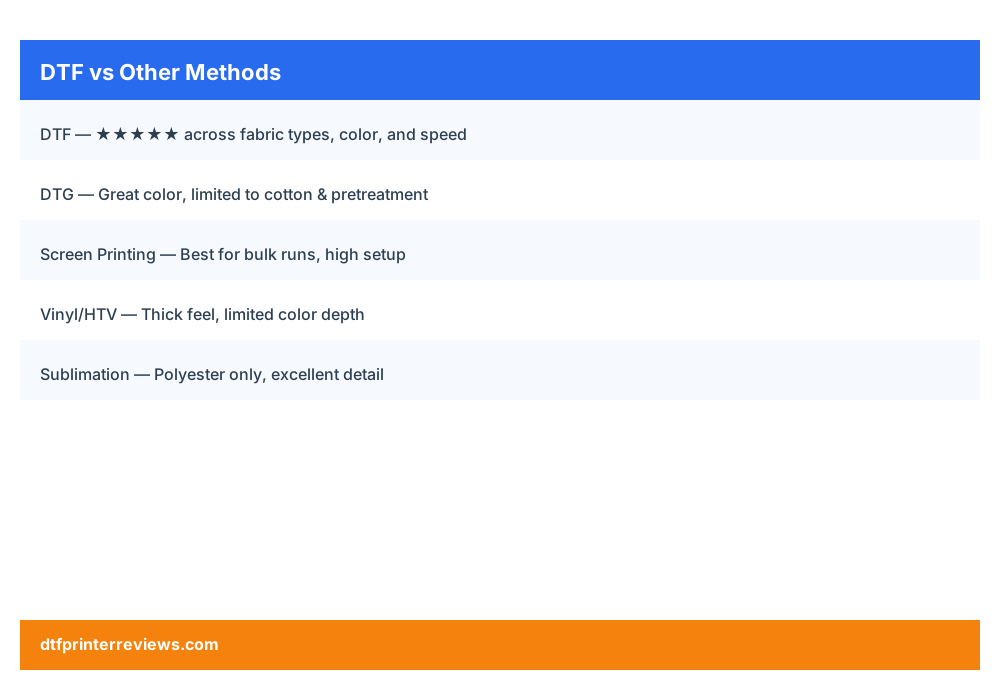
Choosing the right decoration method for your business requires understanding what is DTF printing compared to established alternatives. Each technology has strengths and ideal use cases. Resources like ScreenWeb provide detailed comparisons of various printing technologies.
What is DTF Printing vs. DTG (Direct-to-Garment)
Direct-to-Garment printing has been the digital decoration standard for years, but understanding what is DTF printing reveals several advantages over DTG. While DTG excels on 100% cotton garments, it struggles with polyester and requires expensive pretreatment chemicals. DTF works flawlessly on any fabric type without pretreatment, making it significantly more versatile.
DTG printers also require extensive daily maintenance to prevent white ink from clogging the print heads, whereas DTF printers, while still requiring maintenance, are generally less demanding. However, DTG does offer advantages in production speed for simple designs on light-colored cotton garments and can produce a slightly softer hand feel in some applications.
From a cost perspective, DTF often delivers better economics for small to medium production runs, especially when working with diverse fabric types. DTG may still hold an edge for very small runs on white or light-colored cotton, but what is DTF printing’s versatility makes it the more practical choice for most businesses working across varied product lines.
DTF vs. Screen Printing
Screen printing remains the industry standard for large production runs due to its speed and low per-unit cost at volume. However, it requires expensive setup time, screens for each color, and is only economical when producing dozens or hundreds of identical items. DTF shines in the opposite scenario: low-volume, high-variety production where every print can be different with no additional setup.
Screen printing can achieve certain specialty effects—like high-density prints, puff ink, or metallic finishes—that DTF cannot replicate. However, DTF produces photographic-quality images and intricate details that are difficult or impossible with screen printing. The break-even point typically falls around 50-100 identical pieces, where screen printing becomes more cost-effective than DTF.
For small businesses and custom decorators handling varied orders, DTF eliminates the setup bottleneck of screen printing while delivering professional quality. Many hybrid shops now use screen printing for large uniform orders and DTF for custom, small-batch, or complex multi-color designs.
DTF vs. Vinyl Cutting/HTV
Heat Transfer Vinyl (HTV) has long been the entry point for home-based custom apparel businesses. It requires minimal equipment—just a vinyl cutter and heat press—and offers excellent durability. However, vinyl is limited to solid colors, simple designs, and layered color applications. Each color requires a separate cut and application, making multi-color designs labor-intensive.
DTF eliminates these limitations by producing full-color, photographic-quality images in a single transfer. While HTV might be more economical for simple text or logo applications in solid colors, DTF becomes the clear winner for anything involving color gradients, photographs, or complex artwork.
Both methods require a heat press for application, so businesses often use them complementarily: vinyl for simple, solid-color work and DTF for complex, full-color designs. The hand feel is comparable, with quality DTF transfers matching or exceeding the softness of properly applied HTV.
DTF vs. Sublimation Printing
Sublimation printing produces stunning, vibrant results with an extremely soft hand feel because the ink becomes part of the fabric rather than sitting on top. However, sublimation only works on polyester fabrics or polymer-coated items—the process chemically requires polyester to bond with the sublimation dyes. This makes sublimation impractical for cotton, cotton blends, or natural fibers.
What is DTF printing works on any fabric type, making it far more versatile for apparel decorators who work with diverse products. While sublimation might deliver slightly more vibrant colors on white polyester and a softer feel, DTF offers acceptable quality across all fabric types. Many businesses operate both technologies: sublimation for polyester-specific products and DTF for everything else.
Cost-wise, sublimation equipment can be less expensive at entry level, but the fabric limitation significantly restricts market opportunities. What is DTF printing’s universal fabric compatibility makes it the more practical choice for businesses targeting the broader custom apparel market.
Advantages of DTF Printing Technology
Understanding what is DTF printing’s strengths helps you evaluate whether it’s the right technology for your needs.
Versatility Across Fabric Types
What is DTF printing’s most significant advantage is its universal fabric compatibility. Cotton, polyester, cotton-poly blends, nylon, leather, canvas, tri-blends—DTF works on all of them without modification to your process or transfer parameters. This eliminates the need to invest in multiple decoration technologies for different fabric types.
This versatility extends beyond just fabric composition. DTF transfers adhere well to garments of any color, from white to black, without requiring different transfer films or significant process adjustments. For businesses offering diverse product lines, this flexibility dramatically simplifies operations and inventory management.
Vibrant Colors and Fine Detail Capability
Modern DTF printers equipped with CMYK plus white ink can reproduce virtually any color and achieve photographic-quality detail. The resolution typically ranges from 720 to 1440 DPI (dots per inch), allowing for sharp text, intricate line work, and smooth color gradients that would be challenging or impossible with screen printing or vinyl.
The white ink underbase ensures colors remain true and vibrant even on dark fabrics. Unlike some other methods where dark fabric colors affect the final appearance, what is DTF printing’s opacity allows your design to look nearly identical regardless of the garment color underneath.
Cost-Effectiveness for Small to Medium Runs
DTF occupies a sweet spot in the economics of custom decoration. Unlike screen printing, there’s no per-design setup cost—every print can be different without financial penalty. Unlike DTG, there’s no expensive pretreatment, and maintenance costs are generally lower. For production runs from one piece to several hundred, DTF often delivers the best cost-per-print ratio.
The ability to produce transfers in advance also provides production flexibility. You can create transfers during slow periods and press them on-demand as orders arrive, optimizing workflow and labor costs. This makes what is DTF printing particularly attractive for print-on-demand businesses and custom decorators handling varied orders.
Durability and Wash Resistance
Quality DTF prints demonstrate excellent wash durability, typically lasting 50+ washes when properly applied and cared for. The adhesive bonding creates a permanent bond with fabric fibers that resists cracking, peeling, and fading better than many alternative methods.
The flexibility of the cured adhesive allows the print to stretch with the fabric, making DTF suitable for activewear and stretchy materials without the cracking problems that plague some other decoration methods. This durability, combined with the soft hand feel, makes DTF prints comfortable for end users and reliable for decorators’ reputations.
Lower Learning Curve Compared to Traditional Methods
While what is DTF printing certainly requires learning and practice to master, the learning curve is generally gentler than screen printing or DTG. The process is more forgiving of minor variations, and you can achieve acceptable results relatively quickly. Screen printing requires years of experience to master color separation, screen preparation, and multi-color registration. DTF’s digital workflow eliminates much of this complexity.
The software handles the complex tasks like color separation and white ink generation automatically, allowing operators to focus on production quality rather than technical preparation. Most beginners can produce saleable prints within their first week of operation, though refinement and optimization continue as experience grows.
Limitations and Considerations
No technology is perfect for every situation. Understanding what is DTF printing’s limitations helps set realistic expectations.
Initial Investment Requirements
Entry-level DTF setups start around $500-$1,000 for basic converted printers, but professional equipment that delivers consistent, commercial-quality results typically requires $2,500-$8,000 investment. This includes the printer, powder shaker, heat press, and RIP software. While this is significantly less than professional DTG or screen printing setups, it’s still a substantial investment for many small businesses and hobbyists.
Beyond the equipment, you’ll need to stock consumables (ink, film, powder) and have adequate workspace. The total initial investment to get properly operational often reaches $3,000-$10,000 when accounting for all necessary components, supplies, and the inevitable learning-curve waste.
Consumables and Ongoing Costs
DTF requires ongoing purchases of specialized inks, transfer film, and adhesive powder. Unlike screen printing where you buy ink once and use it for many jobs, DTF consumes these materials continuously. Ink costs typically range from $0.50-$2.00 per standard print depending on coverage, with film adding another $0.30-$0.80 and powder $0.20-$0.50.
These per-print costs must be carefully factored into your pricing structure. While manageable for properly priced work, the consumable expenses can quickly erode profits if your pricing doesn’t account for actual material costs plus waste.
Space and Equipment Needs
A complete DTF operation requires space for the printer, powder shaker, curing unit, heat press, and material storage. While more compact than screen printing operations, you’ll need at least 100-150 square feet of dedicated workspace to operate efficiently. Climate control is also important—humidity and temperature fluctuations can affect ink performance and film behavior.
The equipment also requires electrical infrastructure, with heat presses and curing ovens drawing significant power. Proper ventilation is recommended, though DTF inks produce far fewer fumes than plastisol screen printing inks or solvent-based printing methods.
Production Speed Considerations
While what is DTF printing excels at flexibility and versatility, it’s not the fastest decoration method for large identical orders. Print speeds typically range from 3-15 minutes per transfer depending on size and printer model, plus powder application, curing, and pressing time. For 100 identical shirts, screen printing would be significantly faster and more economical.
However, DTF’s strength lies in variety rather than volume. When every order is different—as is common in custom apparel businesses—DTF’s lack of setup time makes it extremely efficient. Understanding this distinction is crucial for setting appropriate expectations and business models.
Who Should Consider DTF Printing?
What is DTF printing isn’t right for everyone, but it’s ideal for several specific business profiles and use cases.
Small Business Owners and Startups
If you’re starting a custom apparel business with limited capital and uncertain demand patterns, DTF offers an attractive entry point. The equipment investment is manageable, the learning curve is reasonable, and the versatility allows you to accept diverse orders without turning customers away due to technology limitations.
The ability to handle one-off custom orders makes what is DTF printing particularly well-suited for Etsy sellers, home-based businesses, and local custom shops where every order might be different. You can start small and scale as demand grows without needing to completely re-invest in different technology.
Existing Print Shops Looking to Expand
Many screen printing and embroidery shops add DTF capabilities to handle orders that don’t fit their primary technology. DTF fills the gap for small-quantity, full-color work without the setup costs of screen printing. It also opens opportunities for customers whose fabric choices don’t work with your existing equipment.
For DTG operators, DTF provides a backup that works on polyester and eliminates pretreatment chemicals. Many successful print shops now operate multiple technologies, routing each order to the most appropriate decoration method based on quantity, fabric, and complexity.
Custom Apparel Entrepreneurs
If you’re building a brand or running a custom apparel business, what is DTF printing allows you to offer diverse products without massive inventory investment. You can stock blank garments and produce custom designs on-demand, reducing inventory risk and improving cash flow. The quick turnaround times make DTF ideal for rush orders and rapid product testing.
The technology also supports the growing trend toward personalization and small-batch production. As consumers increasingly want unique, customized products rather than mass-produced designs, DTF provides the production flexibility to profitably serve this market.
Print-on-Demand Businesses
DTF’s economics work perfectly for print-on-demand models where every order might be different and inventory holding is impractical. The consistent per-print cost structure makes pricing straightforward, and the fabric versatility means you can offer diverse product catalogs without technology limitations.
Many successful print-on-demand operators use what is DTF printing as their primary decoration method precisely because it eliminates the technology-switching complexity that comes with serving diverse customer needs across different fabric types and order sizes.
Essential Equipment Overview
Understanding the equipment ecosystem helps you plan your investment appropriately. For detailed equipment recommendations and reviews, visit our DTF Printer Reviews section.
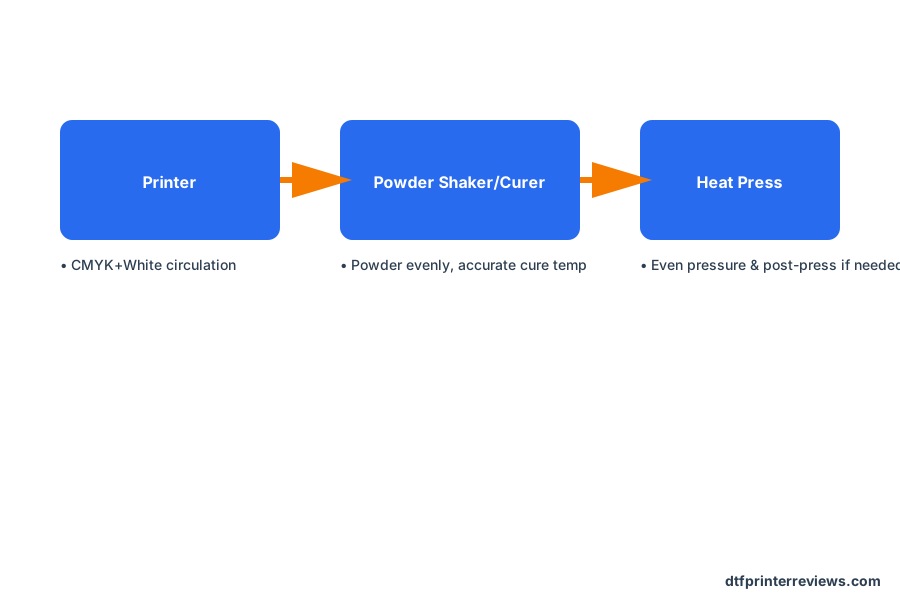
Core Components: Printer, Powder Shaker, Heat Press
A complete DTF operation requires three primary pieces of equipment. The DTF printer itself is a modified inkjet printer equipped with DTF-specific inks and usually featuring CMYK plus white ink channels. These printers range from converted Epson desktop models to purpose-built industrial machines.
The powder shaker or powder shaking machine applies adhesive powder to your printed transfers. Manual shakers work for low-volume operations but can be tedious and messy. Automatic powder shaking machines dramatically improve efficiency and consistency but add to the equipment cost.
Finally, a quality heat press is essential for applying transfers to garments. While you might already own a heat press for other decoration methods, DTF works best with presses that provide even temperature distribution and consistent pressure—swing-away or clamshell presses in the 15″x15″ or larger range.
Additional supporting equipment often includes a curing oven or conveyor dryer for melting the powder adhesive, though some operations use the heat press for both curing and application. You’ll also need RIP software specifically designed for DTF printing to properly manage white ink layers and color profiles.
Size Categories: Desktop vs. Industrial
When considering what is DTF printing equipment, printers range from compact desktop units with 8-13″ print widths suitable for home-based businesses, to wide-format industrial machines with 24-60″ print widths capable of printing multiple transfers simultaneously on gang sheets. Your choice depends primarily on production volume and the size of typical orders. Explore options by visiting our DTF Printers by Size category.
Desktop units offer affordability and space efficiency, making them ideal for startups and side businesses. They typically produce individual transfers sized for single garment prints. Industrial models, while expensive, deliver dramatically better throughput by allowing multiple transfers to be printed together and can handle very large designs that desktop units cannot accommodate.
Mid-range equipment in the 13-24″ category often provides the best balance for growing businesses, offering enough production capacity to handle increased order volumes while remaining affordable and manageable in terms of space and operational complexity.
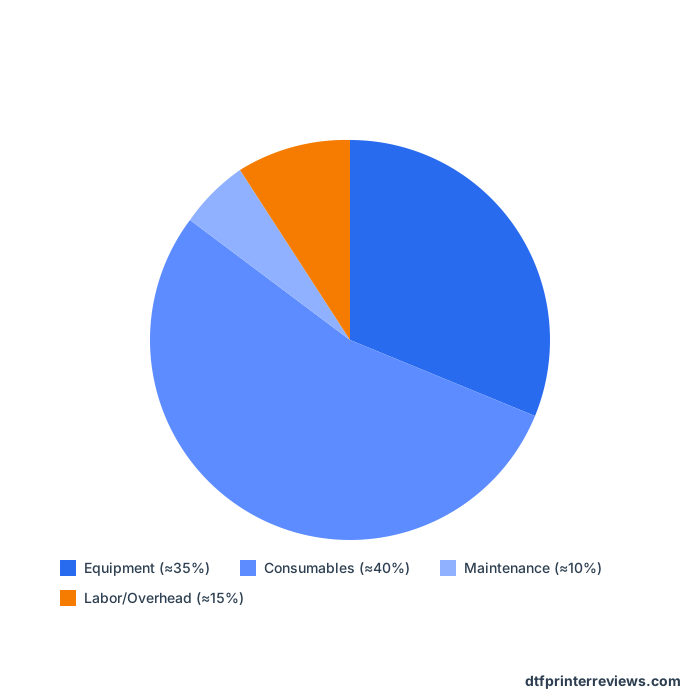
Budget Ranges and What to Expect
Understanding realistic budget expectations prevents disappointment and helps with proper planning:
$500-$1,500 (Entry-Level/Hobby): Converted desktop printers with basic capabilities. Expect manual powder application, slower speeds, and a steeper learning curve. These setups work for hobbyists and very small-scale operations but may frustrate serious businesses.
$1,500-$5,000 (Small Business Range): Purpose-built DTF printers with improved reliability, better print quality, and often automatic powder shaking. This range represents the practical entry point for businesses planning to generate meaningful revenue. Includes necessary heat press and supplies.
$5,000-$15,000 (Professional Equipment): Commercial-grade equipment with faster print speeds, larger format capabilities, more reliable performance, and better support. This investment level suits established businesses adding DTF or serious entrepreneurs launching full-time operations.
$15,000+ (Industrial Operations): Wide-format, high-speed production equipment designed for continuous operation and high-volume output. These systems serve established print shops, contract decorators, and businesses operating at commercial scale.
Getting Started: What You Need to Know Before Buying
Before making any equipment purchase, consider these critical factors. Our DTF Printer Buyer’s Survival Guide provides even more detailed guidance for first-time buyers.
Define Your Goals: Are you starting a business, adding to existing capabilities, or pursuing a hobby? Your answer dramatically affects appropriate equipment choices and investment levels. Be honest about expected order volumes and revenue projections.
Evaluate Your Space: Measure your available workspace carefully. Consider not just equipment footprint but also workflow—you’ll need space to move between printer, powder shaker, heat press, and material storage. Factor in ventilation and electrical requirements.
Research Consumable Costs: Contact suppliers and get actual pricing for inks, film, and powder. Calculate per-print costs based on your typical design sizes and coverage. Ensure these costs allow for profitable pricing in your target market.
Understand Maintenance Requirements: All DTF equipment requires regular maintenance. Research what’s involved in daily, weekly, and monthly maintenance for any equipment you’re considering. Factor maintenance time and cost into your business planning.
Test Before Buying When Possible: Many suppliers offer sample prints or demo opportunities. Take advantage of these to see actual print quality before committing to equipment purchases. Compare samples from multiple suppliers to understand quality variations.
Plan for Learning Curve: Budget time and materials for learning. You’ll make mistakes, waste supplies, and need practice before producing consistent, marketable results. Most successful operators consider their first month an educational investment rather than expecting immediate profitability.
Consider Support and Training: Equipment is only as good as the support behind it. Evaluate warranty coverage, technical support availability, training resources, and user community. Good support often matters more than minor equipment differences.
Conclusion
So, what is DTF printing? It represents a significant evolution in custom apparel decoration, offering a compelling combination of versatility, quality, and accessibility that’s democratizing the custom printing industry. Its ability to work across all fabric types with vibrant, durable results makes it an attractive option for businesses of all sizes.
While what is DTF printing isn’t the perfect solution for every situation—high-volume identical orders still favor screen printing, and certain specialty effects remain outside its capabilities—it occupies a valuable middle ground that serves the growing demand for custom, small-batch, and on-demand production.
For entrepreneurs and small businesses, what is DTF printing provides an achievable path to entering the custom apparel market without the capital requirements or production constraints of traditional methods. For established operations, it offers complementary capabilities that expand service offerings and improve operational flexibility.
As with any business technology decision, success with DTF printing depends on matching the technology’s capabilities to your specific needs, investing appropriately in equipment and training, and building processes that leverage its strengths while acknowledging its limitations. With realistic expectations and proper planning, what is DTF printing can be the foundation of a thriving custom apparel business or a valuable addition to existing decoration capabilities.
Whether you’re just discovering what is DTF printing or seriously considering investment in the technology, understanding these fundamentals provides the foundation for making informed decisions that align with your business goals and market opportunities.
Ready to Explore DTF Printing Equipment?
Now that you understand what is DTF printing, discover the best equipment for your needs and budget with our comprehensive reviews and buying guides.
View DTF Printer ReviewsFrequently Asked Questions About What is DTF Printing
Get answers to the most common questions about Direct-to-Film printing technology
How long do DTF prints last?
Quality DTF prints typically last 50+ washes when properly applied and cared for. The longevity depends on several factors including ink quality, proper curing, correct heat press temperature and pressure, and how the garment is washed and dried.
To maximize durability, follow these care instructions: wash inside-out in cold water, avoid bleach, tumble dry on low heat or hang dry, and don’t iron directly on the print. Many commercial DTF prints can last several years with proper care, comparable to or exceeding screen printing durability.
Can DTF printing be done on any fabric?
Yes, one of DTF’s biggest advantages is its universal fabric compatibility. DTF works on virtually any fabric type including:
- 100% cotton and cotton blends
- 100% polyester and poly-blends
- Nylon and athletic/performance fabrics
- Canvas and denim
- Leather and faux leather
- Tri-blend and other specialty fabrics
Unlike DTG printing (which works best on cotton) or sublimation (which requires polyester), DTF doesn’t have fabric restrictions. The same transfer process works on any material, making it extremely versatile for diverse product lines.
What is the difference between DTF and DTG printing?
DTF (Direct-to-Film) and DTG (Direct-to-Garment) are both digital printing methods, but they work very differently:
DTF prints designs onto a transfer film first, then heat-transfers them to the garment. It works on any fabric type without pretreatment and offers excellent versatility.
DTG prints directly onto the garment like an inkjet printer on paper. It requires fabric pretreatment, works best on cotton, and struggles with polyester and dark synthetic fabrics.
DTF generally offers better fabric versatility, lower maintenance, and no pretreatment requirements. DTG may provide slightly softer prints on light-colored cotton but requires more equipment maintenance and is limited in fabric compatibility.
How much does it cost to start DTF printing?
The initial investment for DTF printing varies based on equipment quality and scale:
- Entry-Level/Hobby: $500-$1,500 for converted printers and basic equipment
- Small Business: $2,500-$5,000 for reliable purpose-built equipment
- Professional Setup: $5,000-$15,000 for commercial-grade systems
- Industrial Operations: $15,000+ for high-volume production equipment
Beyond the printer, you’ll need a heat press ($300-$2,000), powder shaker ($100-$1,500), and initial consumables inventory ($200-$500). Most serious businesses should budget $3,000-$10,000 for a complete, reliable setup including supplies and learning materials.
Is DTF printing profitable for small businesses?
Yes, DTF printing can be very profitable for small businesses when managed properly. Typical profit margins range from 40-70% depending on your pricing strategy, production efficiency, and market positioning.
The key to profitability is understanding your true costs (materials, labor, overhead) and pricing accordingly. A standard DTF print costs $1.50-$3.00 in materials and can sell for $8-$25 retail depending on complexity and market. The lack of setup costs means even single-item orders can be profitable, unlike screen printing which requires minimum quantities.
Most small businesses achieve break-even within 3-6 months with consistent order flow. The versatility of DTF allows you to accept diverse orders that would require multiple technologies, maximizing equipment utilization and return on investment.
What are the main consumables needed for DTF printing?
DTF printing requires three primary consumables that must be continuously replenished:
- DTF Inks: CMYK plus white ink, typically $80-$150 per liter. White ink is used most heavily as it forms the base layer.
- DTF Transfer Film: Special PET film in rolls, typically $0.30-$0.80 per standard print depending on size and quality.
- Hot-Melt Adhesive Powder: Applied to wet ink to create the transfer, typically $0.20-$0.50 per print depending on coverage.
A standard 10″x12″ print typically costs $1.50-$3.00 in total consumables. You’ll also occasionally need print head cleaning solution and maintenance supplies. Planning for 10-15% waste during the learning curve is wise when budgeting initial supplies.
How difficult is DTF printing to learn?
DTF printing has a moderate learning curve—easier than screen printing or DTG, but still requires practice to master. Most beginners can produce acceptable prints within their first week, though refinement and consistency take longer to develop.
The main skills to learn include: RIP software operation for design preparation, proper printer maintenance (especially white ink management), powder application technique, curing parameters, and heat press temperature/pressure/time settings. The process is quite forgiving compared to other methods, and modern equipment automates many complex tasks.
Expect to invest 2-4 weeks of regular practice to become proficient, with continued improvement over the first 2-3 months. Many operators find online communities, YouTube tutorials, and equipment supplier training resources invaluable during the learning process.
Can you feel DTF prints on the fabric?
Quality DTF prints have a slight feel or “hand” compared to the bare fabric, but it’s generally quite soft and flexible. The feel is similar to high-quality screen printing or heat transfer vinyl—you can tell there’s a print, but it’s not thick, stiff, or uncomfortable.
The hand feel depends on several factors: the amount of white ink used (heavier coverage creates more feel), the quality of the adhesive powder, and proper curing. Modern DTF technology produces prints that stretch with the fabric without cracking, making them suitable even for athletic wear and stretchy materials.
DTF prints are generally softer than traditional plastisol screen printing and comparable to water-based screen printing or quality HTV. The feel is more noticeable than DTG or sublimation but acceptable for most applications and improves after the first wash.
What maintenance does a DTF printer require?
DTF printers require regular maintenance to ensure consistent print quality and prevent problems:
Daily: Check white ink circulation system, run test prints to verify nozzle health, wipe print heads if needed, and ensure powder shaker is clean.
Weekly: Deep clean print heads with cleaning solution, check and clean capping station, verify ink levels, and clean powder collection areas.
Monthly: Flush white ink system, replace any worn parts, calibrate color profiles if needed, and perform thorough equipment inspection.
White ink maintenance is critical—it settles quickly and can clog print heads if circulation stops. Most modern DTF printers include automatic white ink circulation systems that run periodically even when not printing. Budget 15-30 minutes daily for basic maintenance.
Is DTF printing eco-friendly?
DTF printing is more environmentally friendly than some traditional methods, but it’s not completely “green.” Here’s an honest assessment:
Advantages: DTF uses water-based inks rather than solvent-based or plastisol inks, produces less waste than screen printing (no screens or emulsion chemicals), enables on-demand production reducing overstock waste, and consumes less water than DTG pretreatment processes.
Considerations: The PET film carrier is plastic (though some companies are developing recyclable options), adhesive powders contain synthetic polymers, and electricity consumption for heating elements is significant.
Overall, DTF is moderately eco-conscious—better than plastisol screen printing or solvent printing, but not as environmentally friendly as water-based screen printing or sublimation. Many operators choose DTF partly for waste reduction through on-demand production rather than mass inventory.
Ready to Start Your DTF Printing Journey?
Explore our comprehensive equipment guides and reviews to find the perfect DTF printer for your needs and budget.
View DTF Printer Reviews